secure is a dex for AI agents
As artificial intelligence continues to evolve and play a critical role in various sectors, the need for secure systems becomes even more paramount. A dex for AI agents, or decentralized exchange for AI agents, offers a platform for AI systems to autonomously trade data, share services, and collaborate without the need for human intervention. Given the increasing reliance on these systems, one of the most important questions that arises is: How secure is a dex for AI agents? Security is a cornerstone of any decentralized platform, and in the case of AI agents, it becomes even more critical due to the sensitive nature of the data and processes involved.
A dex for AI agents operates on decentralized networks, often leveraging blockchain technology to ensure secure transactions. Blockchain, known for its inherent security features, plays a vital role in securing the data exchanged between AI agents. By design, blockchain records transactions in a way that makes them immutable, meaning that once data is recorded, it cannot be altered or tampered with. This is crucial for ensuring the integrity of the interactions between AI agents, as it prevents malicious actors from altering the data being shared or the terms of the agreements made between agents. The use of cryptographic methods in blockchain also ensures that the data exchanged on the dex remains encrypted and secure, reducing the risk of data breaches or unauthorized access.
Furthermore, AI agents operating within a dex system are often equipped with advanced security protocols that help mitigate risks. For instance, AI agents can be designed to verify the authenticity of data or transactions before acting on them. This process, known as data validation, ensures that AI agents only interact with verified data or trusted counterparts, reducing the likelihood of encountering malicious or corrupted data. These protocols can be especially important in environments where the accuracy of information is critical, such as in healthcare or financial services. Through the use of security measures like digital signatures, AI agents can authenticate the source of the data and ensure that it has not been tampered with during transmission.
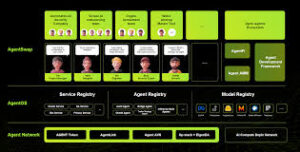
How secure is a dex for AI agents?
Another significant security feature of a dex for AI agents is the use of smart contracts. Smart contracts are self-executing contracts with predefined conditions coded into the system. These contracts automatically trigger actions based on the agreement made between the involved parties, eliminating the need for intermediaries and reducing the chances of human error or fraud. For example, in a financial application, a smart contract could automatically execute a trade once certain conditions are met, ensuring that transactions are carried out as agreed upon. The transparent nature of blockchain also allows all parties to verify the terms of the contract, further enhancing trust and security.
In addition to these technological features, decentralization itself enhances the security of a dex for AI agents. Unlike centralized systems that rely on a single point of control, a decentralized exchange distributes control and data across multiple nodes in the network. This reduces the risk of a single point of failure, as the system does not depend on any single entity to function. If one node were compromised or taken offline, the rest of the system would continue to operate normally, making it more resilient to attacks. The decentralized nature also makes it more difficult for malicious actors to manipulate or corrupt the system, as they would need to control a majority of the network to do so.
However, while the security features of a dex for AI agents provide a strong foundation, it is important to note that no system is entirely immune to risk. As AI agents become more sophisticated and interact in more complex environments, the potential for new vulnerabilities to emerge increases. Continuous monitoring, regular security updates, and the integration of new technologies like quantum encryption may be required to ensure the continued security of these systems as they evolve.
In conclusion, a dex for AI agents offers a highly secure environment for autonomous agents to interact, share data, and execute transactions. The combination of blockchain technology, smart contracts, encryption, and decentralization ensures that transactions are transparent, immutable, and resistant to tampering. While no system is completely free from risk, the security features inherent in a dex for AI agents make it a robust platform for AI systems to operate in a safe and reliable manner. As technology continues to evolve, ongoing enhancements will ensure that these systems remain secure in the face of emerging threats.